The Idea
Why sea salt on a sweet dessert is not a gimmick
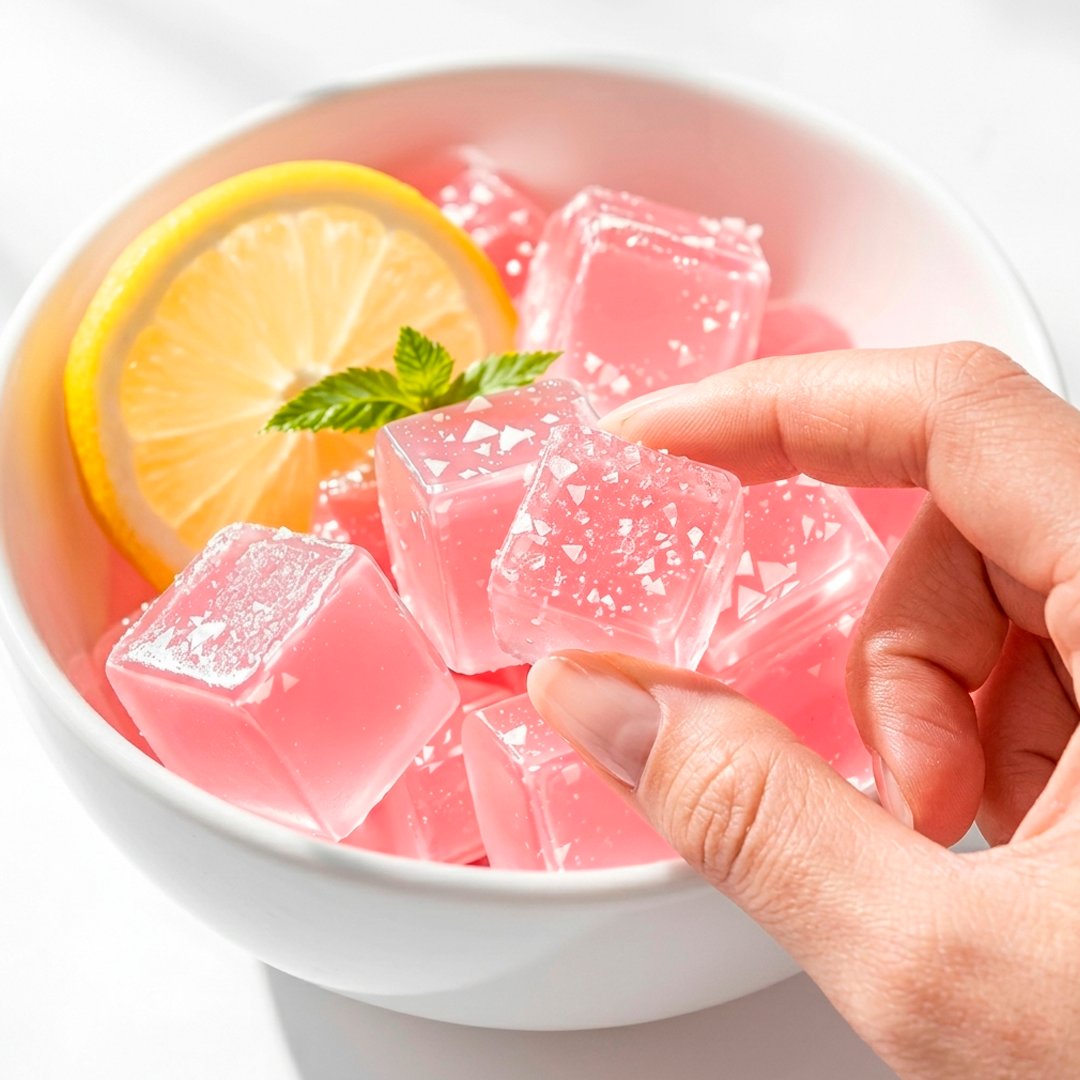
The pairing of sea salt with sweet, acidic fruit is one of the most effective flavour combinations in the dessert world. Salt suppresses bitterness — so a light flake of sea salt on a lemon jelly cube makes the lemon flavour taste brighter and more defined, without adding detectable saltiness. It is the same principle behind salted caramel, but applied here with considerably more restraint.
The translucency of these cubes is what makes the sea salt topping visually effective. Against the clear pink jelly, the white flakes are plainly visible, which signals to the person eating it that something intentional and thoughtful has been done. That moment of recognition — before they have even tasted it — changes how the dessert is experienced.
🍋
The Lemon Component
Fresh lemon juice, not concentrate — the sharper edge of fresh juice holds up better against the sweetness of the gelatin base. Zest adds aromatic depth the juice alone doesn't provide.
🌸
The Pink Colour
Achieved entirely from hibiscus, raspberry, or cranberry juice — no artificial colouring. The exact shade depends on the fruit source used and its concentration.
🧂
The Sea Salt Finish
Flaked sea salt only — fine grain salt dissolves too quickly. Flakes stay intact long enough to be tasted individually, which is where the contrast effect comes from.
The Full Ingredient List
Four ingredients, one technique
| Ingredient | Quantity | Notes |
|---|
| Unflavoured gelatin | 10g per 500ml liquid | Produces firm, holdable cubes that cut cleanly |
| Fresh lemon juice | 3–4 tablespoons | Added after dissolving gelatin, not during |
| Fruit juice (for colour) | 60–80ml | Hibiscus, raspberry, or cranberry — adjust for depth of pink |
| Flaked sea salt | A pinch per cube | Applied after cutting, immediately before serving |
"These look like something from an expensive café menu. I served them at a birthday and every single person photographed them before eating. The sea salt detail is what makes them — it sounds odd, but it's perfect."
— READER · CITRUS & GEL COMMUNITY
Critical Technique
The one step most recipes skip
Add the lemon juice after the gelatin has fully dissolved and the mixture has come off the heat, not during the dissolving process. Acid can interfere with how gelatin blooms and sets — particularly if the mixture is still very hot when the juice goes in. Adding it at around 50–60°C ensures the flavour is fresh and bright rather than cooked and flat.
The complete recipe guide specifies the exact order of operations and the temperature windows at each stage, which is the most reliable way to get consistent results rather than relying on visual judgment alone.
Complete Recipe Access
Get the Full Pink Lemonade Jelly Recipe
Exact measurements, temperature guidance, substitution notes, and the sea salt timing detail that most versions of this recipe leave out.
Access Full Recipe →
TOTALLYANNU.SHOP · SPONSORED CONTENT
Advertising Disclosure: Citrus & Gel is an independent affiliate content platform. This page contains sponsored content and we earn a commission on qualifying purchases through our links at no additional cost to you. All content is for informational and entertainment purposes. Always follow food safety guidelines when handling gelatin. Individual results will vary based on ingredients and technique.